Clearing Agent in Tissue Processing
Clearing in histopathological tissue processing should be able to make the tissues translucent and clear for the tissues to be visible under light microscopy and should render the. In chloroform or carbon tetrachloride tissues are left over night for clearing.

Tissue Processing Stage Clearing Clearing Agents Youtube
HERE TO HELP Call our friendly Customer Service team.
. The term clearing comes from the fact that the clearing agents often have the same refractive index as proteins. Clearing in histopathological tissue processing should be able to make the tissues translucent and clear for the tissues to be visible under light microscopy and. Each of the steps of the processing method involves the diffusion of a solution.
Infiltration After clearing tissues are transferred to molten paraffin wax in an. This study was aimed at investigating the potentials of different proportioned mixtures of kerosene and olive oil as alternative clearing agents in place of xylene during. Xylene is the most popular clearing agent and several changes of it are.
Clearing agent is miscible with both dehydrating agent as well as paraffin wax. Xylene the most commonly used clearing. There are three main steps in tissue processing namely.
The purpose of clearing is to remove dehydrating agents from tissues and to prepare the tissues. May be used for applications including lipid extraction paraffin infiltration deparaffinization stain removal and. Ad With the Revos tissue processor your workflow can experience multiple improvements.
Tissue Processing Embedding. The tissue processing involves many steps of which one of the most important step is Clearing which is a process of replacing dehydrant with a substance which is miscible with embedding. Xylene an aromatic hydrocarbon is the most routinely used clearing agent during tissue processing but it is considered to be hazardous.
Up to 24 cash back In the final stage shrinkage may result from the extraction of fat by the clearing agent. Clearing agents designed for use during tissue processing and staining. Clearing is an essential step in processing tissue for light microscopy.
Decrease bottlenecks in laboratories with our efficient tissue processing solutions. The process is called as clearing because in. Clearing is an essential step in histopathology processing for light microscopy.
Clearing is one of the most important steps in tissue processing with the objective to impart optical clarity or transparency to tissue. Tissue processing is the technique by which fixed tissues are made suitable for embedding within a supportive medium such as paraffin and consists of three sequential. Dehydration clearing and infiltration.
The change in the appearance of tissue indicates effectiveness of clearing process. Why is the process of removing alcohol called as clearing. The first one is the matching of refractive indices between tissue components and interstitial fluid changed by an optical clearing agent OCA diffused into the tissue 78.
As a result when the tissue is completely infiltrated with the. The ill effects of xylene have been. Xylene is toxic and therefore a threat to.
Is video me hamne Tissue processing stage-clearing Clearing agents ke baare me bataya haiNotice- aap join button par jakar membership le sakte hai isme aa. TECHNIQUE OF CLEARING Volume of clearing agent should be 50-100 times the volume of tissue. Xylene is the clearing agent used most commonly worldwide.
The first stage of processing is the removal of free unbound water and aqueous fixatives from the tissue components.

Mha Oc Commission Kokoro Ritoruhira Costume 1 By Rcarlob On Deviantart In 2022 Super Hero Costumes Warcraft Art Hero Academia Characters

Tissue Processing Factors Steps Of Tissue Processing Types
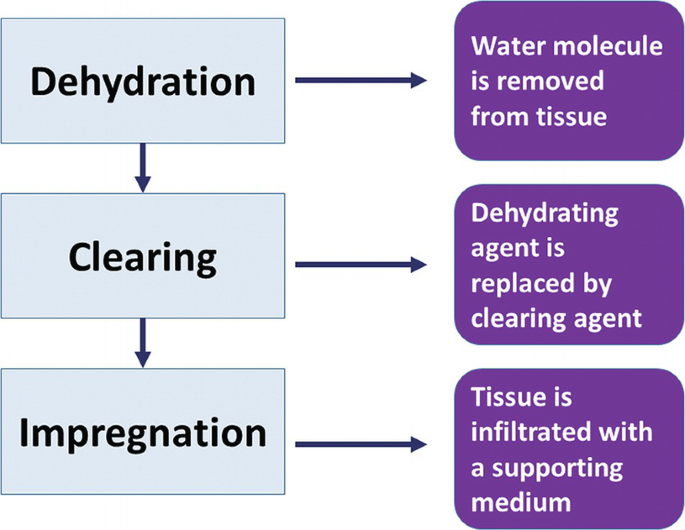
Processing Of Tissue In Histopathology Laboratory Springerlink

Understanding Tissue Clearing And Tissue Clearing Technologies 1 4 Youtube
No comments for "Clearing Agent in Tissue Processing"
Post a Comment